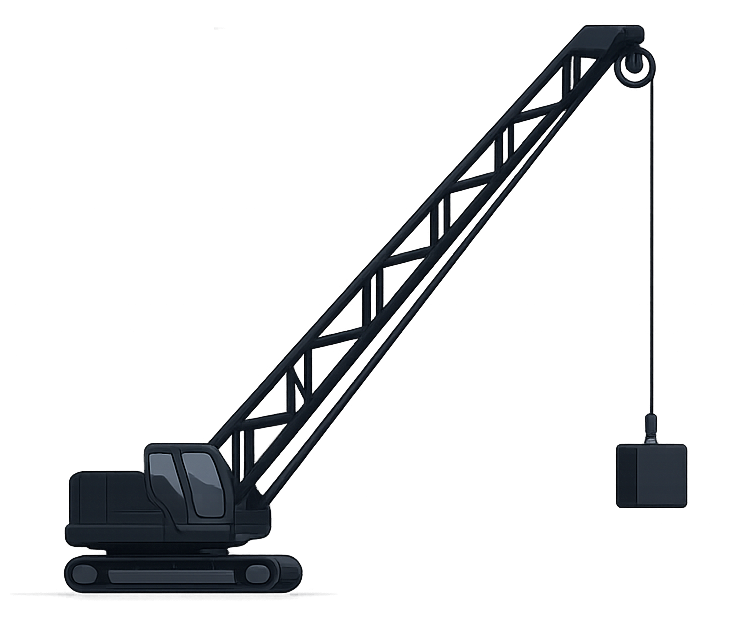
A crane positions pulleys above loads
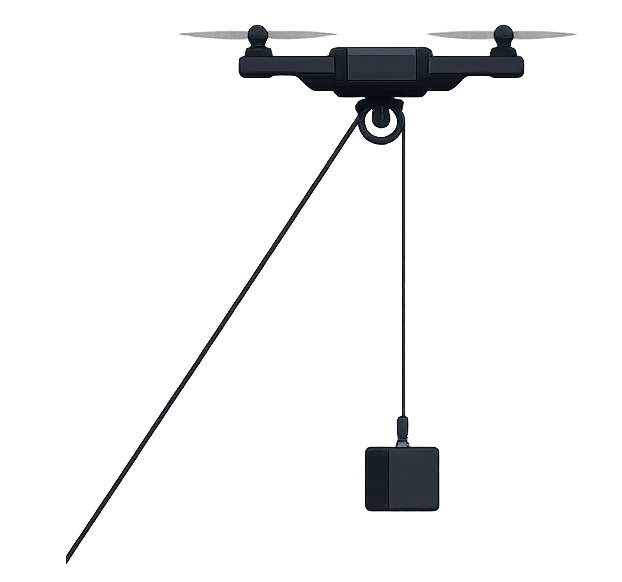
What if a drone could do the same?
Drone Lyne is reimagining how cameras, sensors and payloads can be deployed in difficult-to-access environments.
Conventional Lifting Limitations
Conventional Crane
Strengths
- High lifting capacity
- Structure supports the load
- Ground-controlled winch deployment
Limitations
- Limited by boom length
- Large setup requirements
- High overturning moments
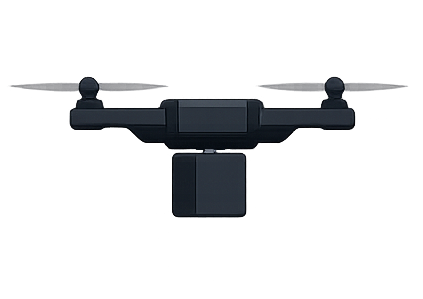
Conventional Drone
Strengths
- Excellent aerial access
- Rapid deployment
- High stability when stationary
Limitations
- Positioning tied to drone movement
- Reduced stability while manoeuvring
- Access constrained by propeller clearance
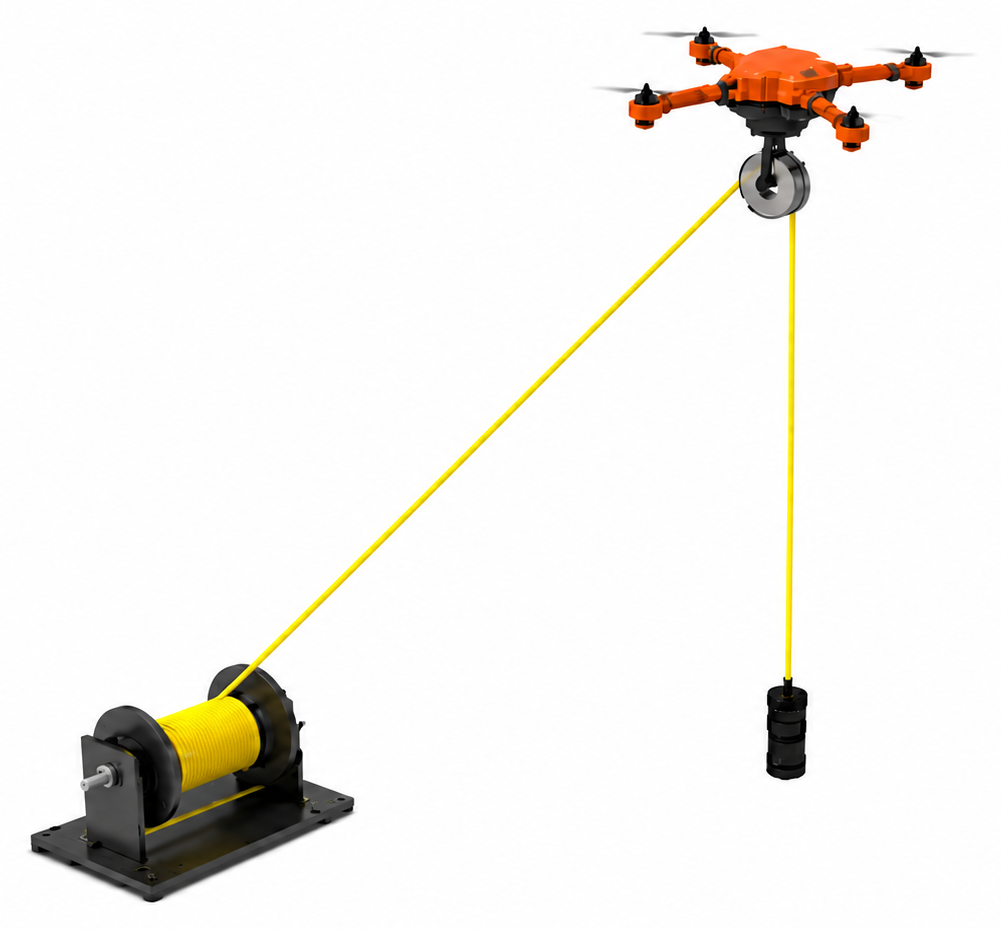
Drone Lyne combines the ground-controlled deployment of a winch system with the rapid aerial access and precise stationary positioning of a drone.
A pulley positioned by a drone
Why Drone Lyne
Extended Reach
Deploy payloads beyond the reach of conventional crane booms and fixed structures.
Tight Access
Deploy through narrow openings and confined spaces where conventional drone deployment is restricted.
Hazardous Environments
Deploy into high-temperature, corrosive, radioactive and other hazardous environments while keeping the drone outside the operating area.
Subsurface Deployment
Deploy payloads below the water surface while the drone remains safely positioned above.
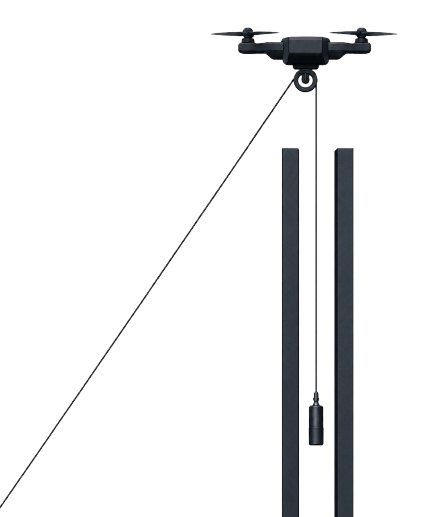
Ground-Controlled Deployment
Maintain precise payload control independently of the drone throughout deployment and recovery.
Surface Monitoring
Measure payload depth, line tension and deployment status directly from the ground-based winch.
Line Transmission
Carry power, data, signals or materials through the deployment line directly to the payload.
Extended Deployment Duration
Supply the drone via a power tether to support extended deployment operations.
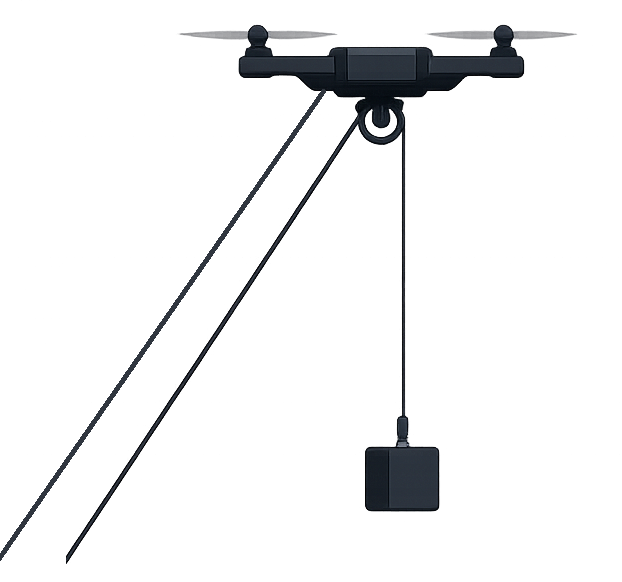
Modular Payloads
Deploy cameras, sensors and specialist equipment using the same deployment platform.
Flexible Payload Size
Support payload geometries that would otherwise be restricted by drone propeller clearance.
Temporary Infrastructure
Rapidly create a temporary overhead deployment point without permanent structures, modifying existing infrastructure or large lifting equipment.
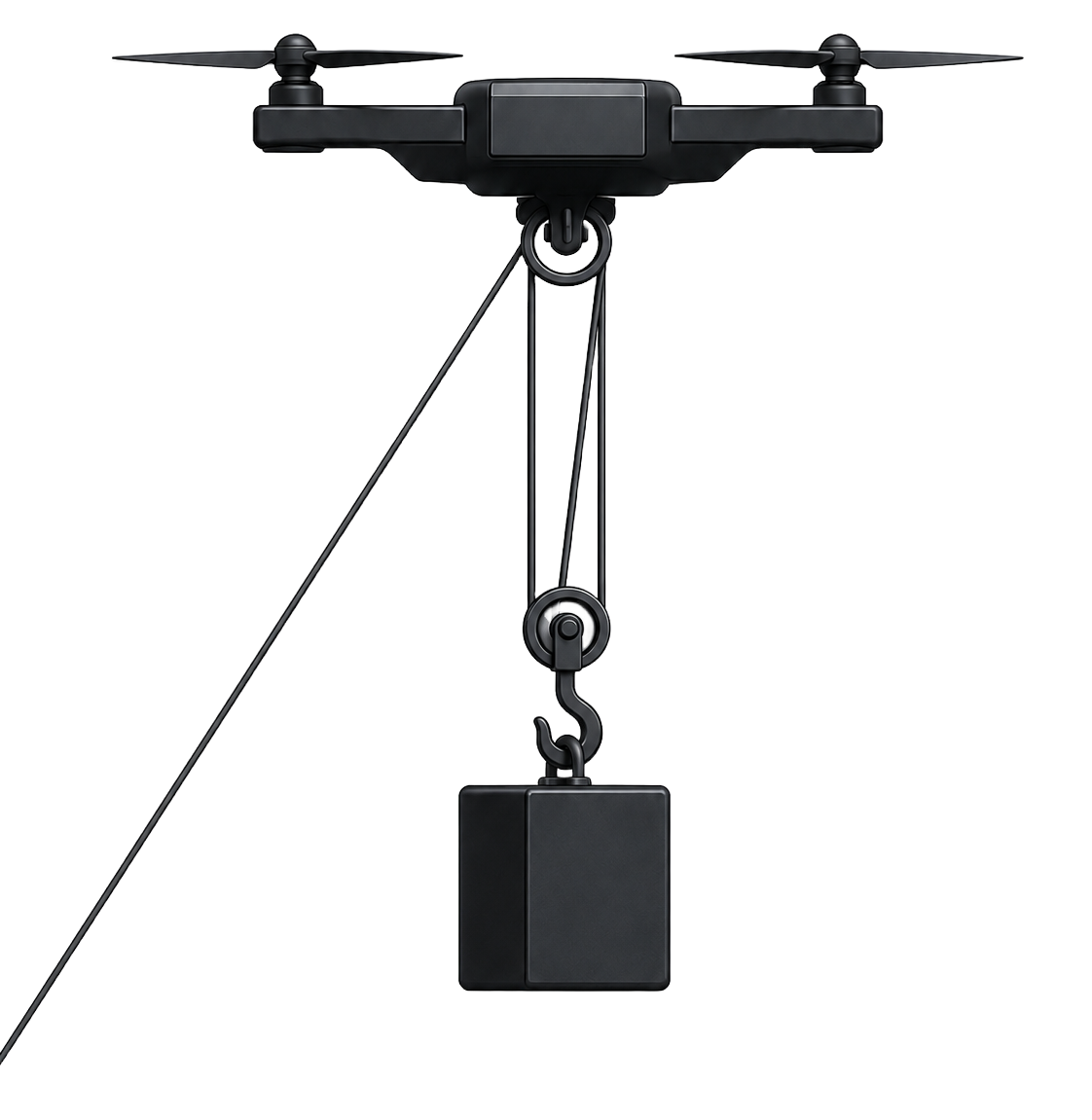
Increased Payload Capacity
Integrate block-and-tackle arrangements to reduce loading on the drone and increase deployment capability.
Flexible Contingencies
Support multiple recovery and release strategies depending on operational requirements.
Emergency Line Release
If a payload becomes stuck, release or sever the line from the ground while allowing the drone to return safely.
Secured During Flight
Keep payloads securely attached during take-off, transit, positioning and return flight.
Reduced Ground Loading
Avoid the large ground reactions and overturning moments associated with conventional crane booms.
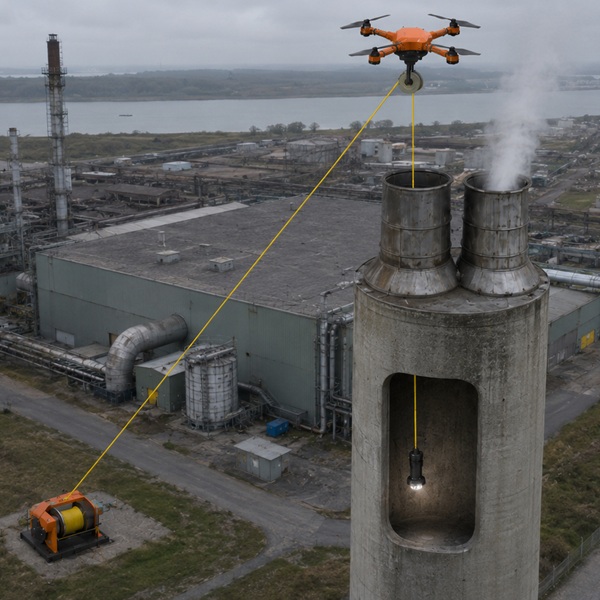
Stack Inspection
Industrial stack inspection demonstrates the core capabilities of the Drone Lyne platform. By positioning the drone above the stack and flue gas stream, payloads such as cameras and sensors can be deployed to inspect properties inside the stack.
Key Capabilities
- Payload depth measured and controlled from the winch.
- Deploy through narrow stack openings and internal restrictions.
- Suitable for structurally unstable or hot stacks.
- Compatible with cameras, gas composition, PVT sensors and more.
- Flexible contingency and payload recovery options.
Marine
Drone Lyne extends vessel-controlled deployment beyond the reach of conventional cranes. A drone positions the pulley while a vessel-based winch controls payload depth and maintains connection between the payload and the vessel.
Key Capabilities
- Deploy beyond the vessel's conventional crane envelope.
- Recover, reposition and redeploy unsuccessful placements.
- Flexible payload release and vessel-based recovery options.
- Compatible with lines, flotation devices, sensors and more.
- Maintain vessel-to-payload connection after line released by drone.
Where Two Worlds Meet
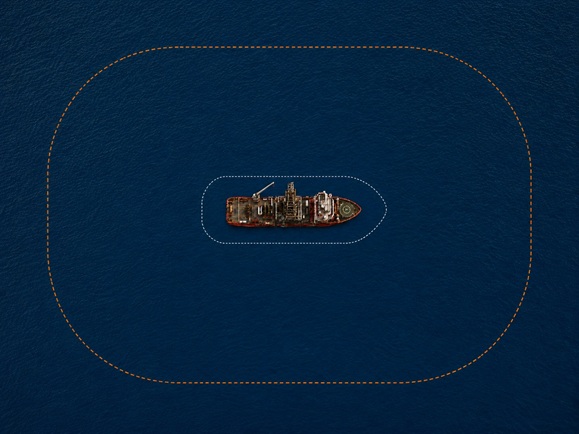
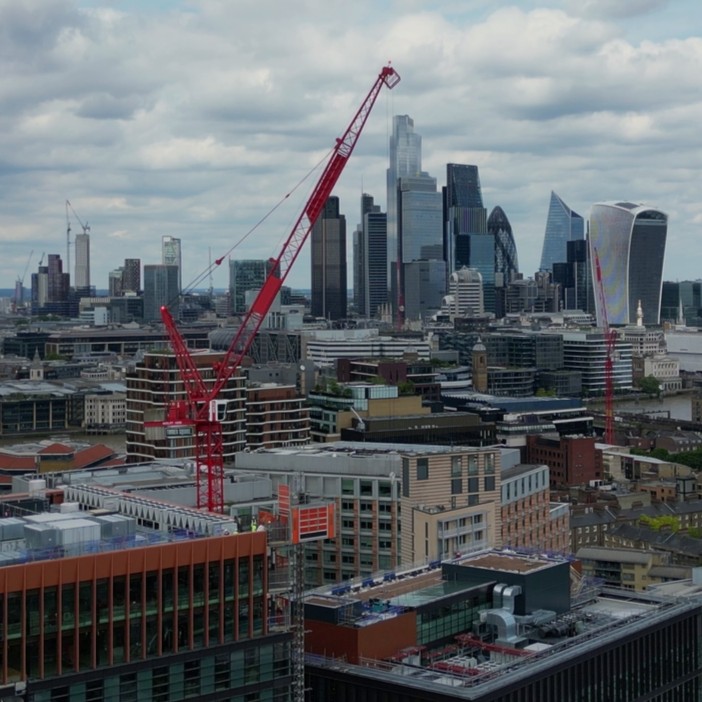
Drone Lyne brings together experience from two very different industries: subsea oil and gas inspection and construction drone operations. The concept combines lessons learned from both industries and is being developed in Derby.
Experience deploying inspection tools in challenging subsea environments, together with surveying cranes that are shaping London's skyline, helped develop a simple idea: position a pulley with a drone, then control the payload from the ground.
About Drone LyneWork with Drone Lyne
Whether you have a question, a challenging access problem or a project you would like to discuss, our team is here to help.
Contact Us