A Different Approach
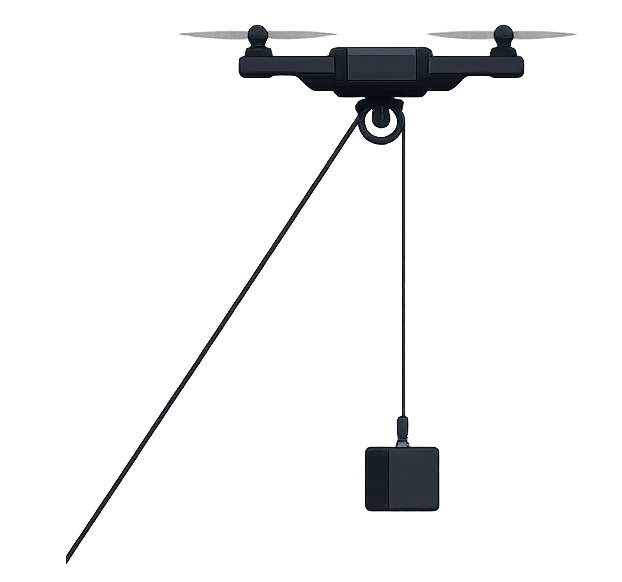
Drone Lyne is developing a new approach to aerial payload deployment by allowing the drone to do what it does best: provide rapid aerial access and stable positioning. Rather than placing every function on the drone, Drone Lyne transfers payload deployment and control to the ground, creating a simple, adaptable platform inspired by proven engineering principles.
Where Two Worlds Meet
Conceived in Derby, Drone Lyne brings together experience from construction drone operations and subsea oil and gas inspection.
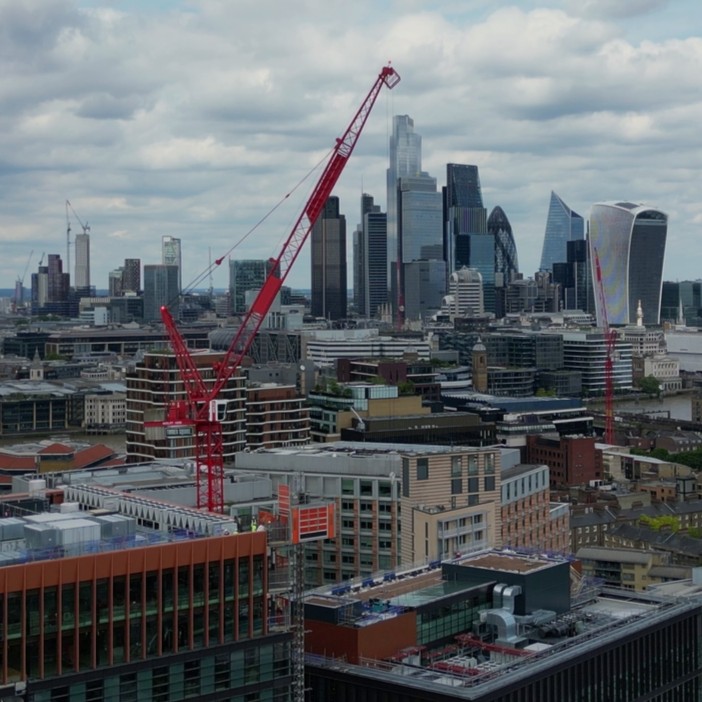
Continuous exposure to tower cranes while carrying out drone work highlighted how effectively they position pulleys above loads. This prompted a simple question: what if a drone could perform the same function?
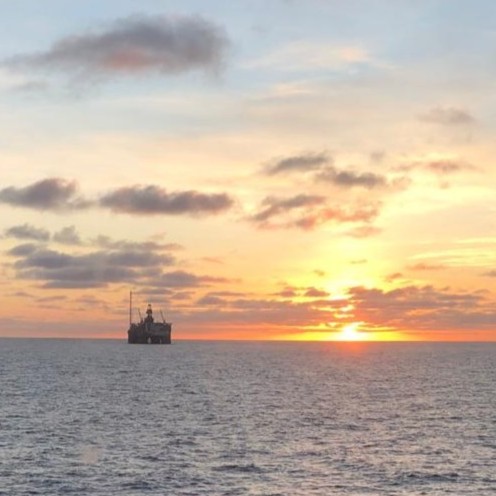
The concept is shaped by years of deploying wireline inspection tools in challenging subsea environments, with an emphasis on safety, reliability and robust contingency methods. Together, these two disciplines form the foundation of the Drone Lyne system.
Passive by Design
Many aerial deployment systems continue to increase the role of the drone by adding more sensors, mechanisms and control systems onboard. Drone Lyne explores a different philosophy: keeping the drone as passive as possible while allowing ground-based systems to perform the work of deploying, controlling and recovering the payload.
By separating aerial positioning from payload deployment, the platform remains mechanically simple, adaptable and capable of supporting a diverse range of payloads and future applications.
The objective is not to make the drone more complex, but to make the overall system more capable.