Marine
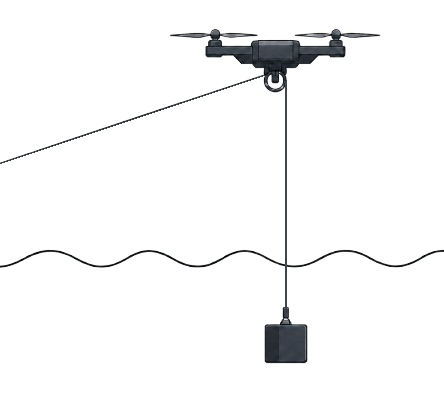
Drone Lyne uses a drone-positioned pulley and vessel-based winch to deploy lines, flotation devices and specialist payloads beyond the reach of conventional vessel cranes.
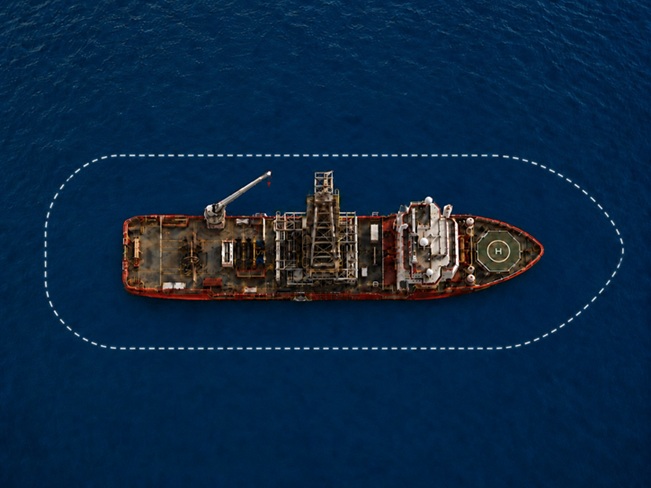
Vessel Reach Is Limited by Boom Length
Conventional vessel cranes provide controlled lifting close to the deck, but their operating footprint is limited by boom length. Reaching farther away normally requires the vessel to manoeuvre closer, launch a smaller craft or drop a payload from a drone.
These approaches can take time, expose personnel to additional risk or provide limited control after deployment.
Drone Lyne Deployment
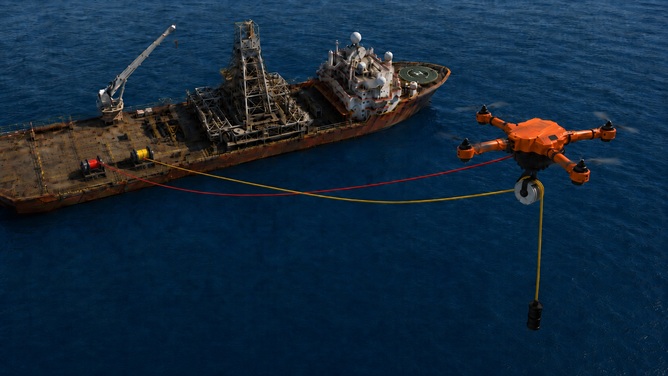
Drone Lyne replaces the fixed end of a crane boom with a mobile, drone-positioned pulley. A winch aboard the vessel controls the line and payload while the drone establishes the deployment point.
By moving the pulley away from the vessel, lightweight equipment can be raised, lowered and positioned hundreds of metres beyond the deck. The vessel retains control without moving directly over or alongside the target.
Deploy Beyond the Vessel
Drone Lyne allows marine deployment systems to be configured around the needs of each operation. Different drones, lines and payloads can be combined to transfer messenger lines, position flotation devices or deploy specialist sensors.
Marine Deployment Scenarios
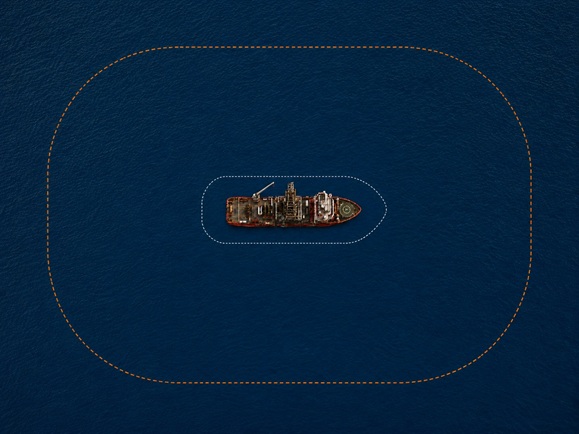
Configure Drone Lyne around the operation by changing the line, payload and deployment method. Transfer a line, position safety equipment, deploy sensors or move specialist payloads beyond the vessel’s conventional operating footprint.
Establish a Connection at a Distance
Carry the first lightweight connection between vessels, to shore or to offshore infrastructure whilst keeping the vessel a safe distance away.
How It Works
Position
The drone positions itself above the receiving target.
Transfer
The magnetic payload is lowered to the receiving vessel to form a temporary connection, then the drone releases the line.
Build the Connection
The messenger line is used to pull across progressively stronger lines.
Complete
The final line, hose or cable is secured and the Drone Lyne system is recovered or prepared for the next transfer.
Establish the first connection before committing the vessel to a close approach.
Place, Recover and Reposition
Position flotation or survival equipment close to a casualty while retaining control after the initial deployment.
How It Works
Approach
The drone carries the rescue equipment towards the casualty and hovers above the target location.
Place
The rescue equipment is lowered onto the water close to the casualty rather than dropped from height.
Correct
If the first placement misses, the device can be recovered, repositioned and deployed again.
Support
The drone releases the line, leaving the casualty and rescue equipment connected to the rescue vessel via the line.
A missed placement does not have to become a lost opportunity.
Measure Beyond the Hull
Position sensors ahead of or alongside the vessel and deploy them away from ship disturbances.
How It Works
Select the Position
The drone establishes a measurement point beyond the vessel’s immediate footprint.
Lower to Depth
The Drone Lyne system lowers the instrument to the required operating depth.
Measure or Survey
The sensor can be held in place, moved between positions or profiled through different depths.
Recover
The equipment can be returned to the vessel by drone, or the line released from the drone and reeled in by the vessel.
Gain critical insight into what lies ahead to inform the vessel’s future course.
Move Equipment Beyond the Deck
Establish a temporary lifting point beyond the reach of the vessel’s crane to transfer suitable payloads towards another vessel, structure or shoreline.
How It Works
Deploy the Pulley
The drone positions the pulley above the intended transfer location.
Controlled Lifting
The Drone Lyne system raises or lowers the payload using the vessel-based winch.
Deliver Without Landing
The payload can be lowered onto a restricted location without requiring the drone itself to land there.
Recover the System
After delivery, the line can be returned to the vessel or used to support a subsequent transfer.
Block-and-tackle systems reduce the load on the drone, allowing it to lift heavier payloads and improve precision.
Greater Reach, Greater Control
Safe-Distance Operations
Deploy equipment while keeping the vessel away from hazards, structures or restricted areas.
Extended Operating Area
Reach locations well beyond the vessel's conventional crane envelope.
Controlled Placement
Lower equipment vertically and control its selected depth below the surface rather than dropping it from the air.
Recoverable Deployment
Retrieve, reposition and redeploy a payload when the initial placement is unsuccessful.
Extended-Duration Operations
Power a tethered drone from the vessel to maintain the deployment point for prolonged operations.
Modular Payloads
Adapt the system for lines, flotation devices, cameras, sensors and specialist equipment.
No Drone Landing Required
Deliver equipment to restricted locations without requiring space for the drone to land.
Flexible Recovery Options
Recover through the drone, release the line or reel the system back using the vessel winch.
Discuss Marine Operations
We are working with vessel operators, marine contractors, search and rescue organisations, sensor manufacturers and offshore technology teams to explore marine applications for Drone Lyne. If you have a challenging marine access problem, a line to transfer or specialist equipment to deploy, we'd love to discuss how Drone Lyne could help.
Contact Us